
 Share
Share 


The NFL has asked the U.S. Supreme Court to review a case that could shape how sports-related prediction markets are regulated across the country.
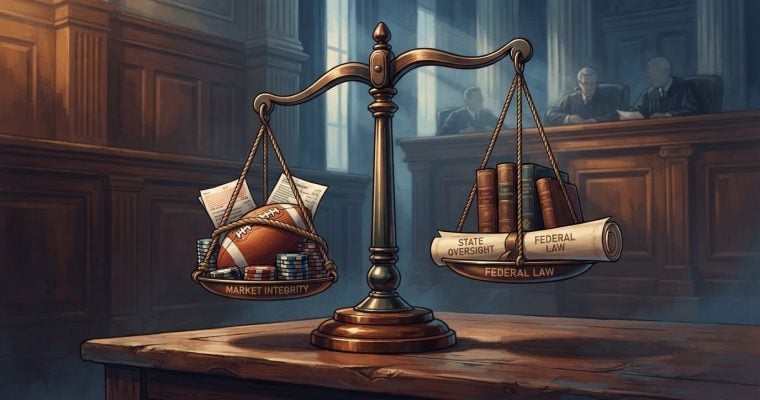
In an amicus brief supporting New Jersey’s request for review, the league argued that current federal oversight may not be enough to protect consumers or safeguard the integrity of professional football. At issue is whether federal law preempts state efforts to police platforms such as Kalshi, which offer event contracts that critics say can resemble sportsbook wagers.
NFL says delay raises integrity and consumer risks
According to the filing, the NFL wants the court to move quickly. The league said “billions of dollars will be bet on NFL games through prediction markets each season” and warned that further delay would increase consumer harm and game-integrity risk.
The brief also points to concerns the NFL has previously raised with the Commodity Futures Trading Commission, including markets tied to officiating decisions and other outcomes that could be manipulated by an individual. The NFL argued that the CFTC’s oversight resources are limited, noting that the agency has 543 employees nationwide.
ESPN also reported that attorneys general from 39 states and the District of Columbia filed a separate brief supporting review.
Case centers on state power over Kalshi markets
New Jersey is asking the Supreme Court to resolve conflicting appellate rulings over whether it can enforce its gambling laws against Kalshi. The broader legal question is whether prediction markets that function like financial exchanges fall under exclusive federal regulation or can also be restricted by states.
That distinction matters well beyond one operator. The article notes that Kalshi and Polymarket have drawn attention because their products can look similar to sports betting, even though they operate in the prediction-market space.
An NFL source told ESPN the league could accept a federal framework if it mirrored the approach used by state regulators.
What comes next
Kalshi’s response is due by Nov. 9. If the Supreme Court agrees to hear the case, the dispute could become a major test of where the line is drawn between federal commodities oversight and state gambling enforcement.
For players, the immediate takeaway is that the rules around sports event contracts remain unsettled while the legal fight continues.
—
Source: As reported by bradenton.com.