

 Share
Share 


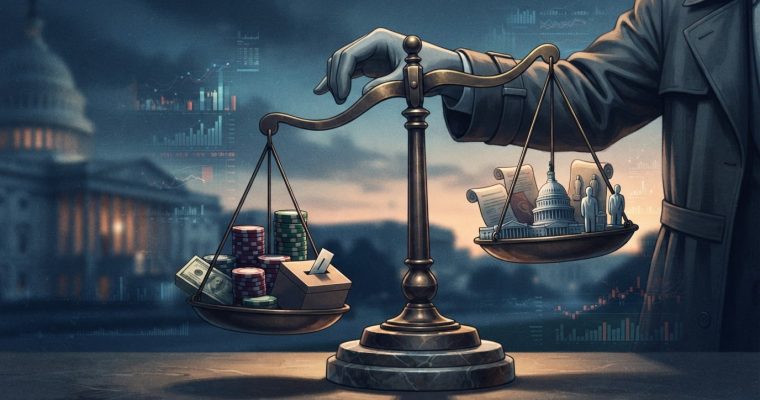
Prediction markets tied to the 2026 U.S. midterm cycle are facing renewed scrutiny after roughly $200 million had been wagered as of early August, according to Ballotpedia, citing an NBC News analysis. The discussion centers on platforms including Polymarket and Kalshi, and on whether election-related contracts should be viewed as a forecasting tool, a financial product, or gambling.
For readers who follow regulated betting and prediction markets, the immediate takeaway is that election-event contracts remain under legal and policy pressure even as trading activity grows.
Manipulation concerns are back in focus
A Reuters-cited report from the Anti-Corruption Data Collective said 94% of more than 11,000 congressional markets it studied moved by the equivalent of 10 percentage points after a single bet of less than $1,000. That finding has fueled concerns that thinly traded political markets can be pushed around by relatively small wagers.
Polymarket and Kalshi disputed that interpretation, saying participants have incentives to correct distorted prices. Even so, the debate highlights a core issue for prediction markets: whether quoted probabilities reflect broad market wisdom or can be temporarily skewed in low-liquidity markets.
Legal questions go beyond market pricing
The source also points to broader questions from states and election officials over whether election contracts amount to gambling and whether financial incentives tied to political outcomes could affect public confidence in elections.
Those questions matter beyond the 2026 race itself. If regulators decide election contracts should be treated more like gambling products, platforms could face a different compliance path than they would under a pure prediction-market or financial-market framework.
What to watch next
The source does not identify a specific new enforcement action or rule change. But it does leave several open questions, including what steps state or federal regulators may take, how the reported trading volume is split between platforms, and which jurisdictions may move first on election-market oversight.
For now, the biggest verified development is clear: election prediction markets are drawing substantial money and equally substantial scrutiny at the same time.
—
Source: As reported by CNN-News18.