

 Share
Share 


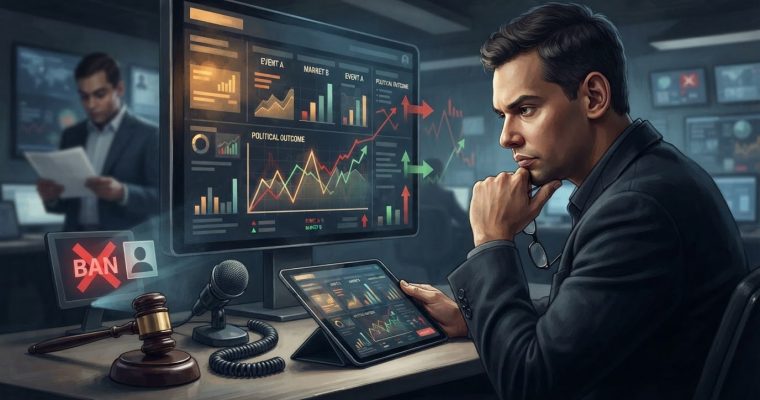
Prediction markets are back under the microscope after an NPR segment detailed Kalshi’s permanent ban of former Congressman George Santos and renewed concerns about how election-related markets could be manipulated.
According to the transcript, Kalshi banned Santos for insider trading and fined him more than $70,000. The report said Santos allegedly bet on a market tied to whether he would attend the State of the Union while publicly saying he was excited to go, then made nearly $18,000 when he did not show up.
Kalshi ban and reported federal scrutiny
NPR’s Bobby Allyn said he developed the story through conversations with current and former Kalshi employees, then reviewed attendance markets and trader discussions on Discord. In the segment, Allyn said Justice Department and Commodity Futures Trading Commission officials confirmed they had opened an investigation into Santos’ trades.
The transcript does not provide the current status or outcome of those reported investigations. It also does not include a response from Santos to the underlying trading allegations.
Allyn also said that after the story ran, Santos called him from a blocked number and threatened him, saying that if the reporting continued, he would have “a gun in your face.” Allyn said colleagues urged him to make the threat public.
Why election prediction markets are drawing more concern
Beyond the Santos case, the segment framed 2026 as the first major U.S. election cycle in which prediction markets are this mainstream. It pointed to operators including Kalshi and Polymarket and said election-integrity experts worry such markets could be vulnerable to misinformation campaigns, foreign actors, partisan actors, or other bad-faith traders trying to move prices and profit.
Another concern raised in the discussion was the possibility that election workers, campaigns, or others with inside information could use those markets for financial gain. As Allyn put it in the transcript, the longstanding CFTC view has been that these markets are “susceptible to manipulation” and can undermine the public interest.
For readers following gambling and market-regulation issues, the immediate takeaway is not a new rule change but continued scrutiny around whether political event contracts can be monitored closely enough to prevent misuse.
—
Source: As reported by Bobby Allyn, Adam Raney, Gabriel J. Sánchez, Shannon Bond, Joel Rose.